The Engineering Challenge
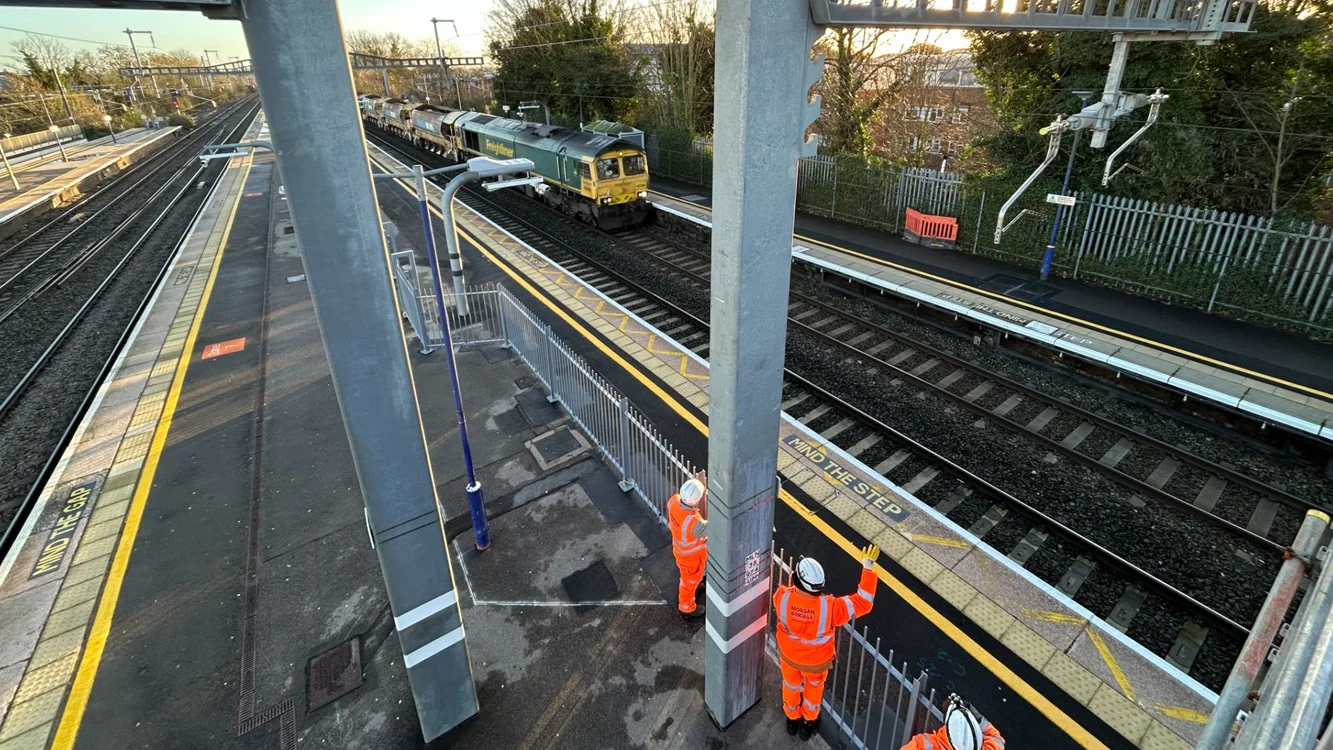
Electrical and communications cabling serving Platforms 2 and 3 needed to cross a shallow reinforced concrete bridge deck within the station footprint. Existing lighting cables were fixed to precast slabs, with a cable tray arrangement located beneath the deck.
The available build-up above the bridge deck was limited, with the existing platform surfacing thickness of approximately 25 mm insufficient to accommodate conventional buried conduit solutions. Any new cable route therefore needed to operate within very tight depth constraints while maintaining the integrity and level of the finished platform surface for passengers.
During option development, routing services beneath the bridge deck was considered. This approach would have required breaking out to column positions below the structure. Given that the bridge spans the A308, this option was identified as introducing the potential need for traffic management and night-time road closures, along with associated programme and delivery risk, and was therefore discounted.
A First-of-a-Kind Shallow Deck Solution
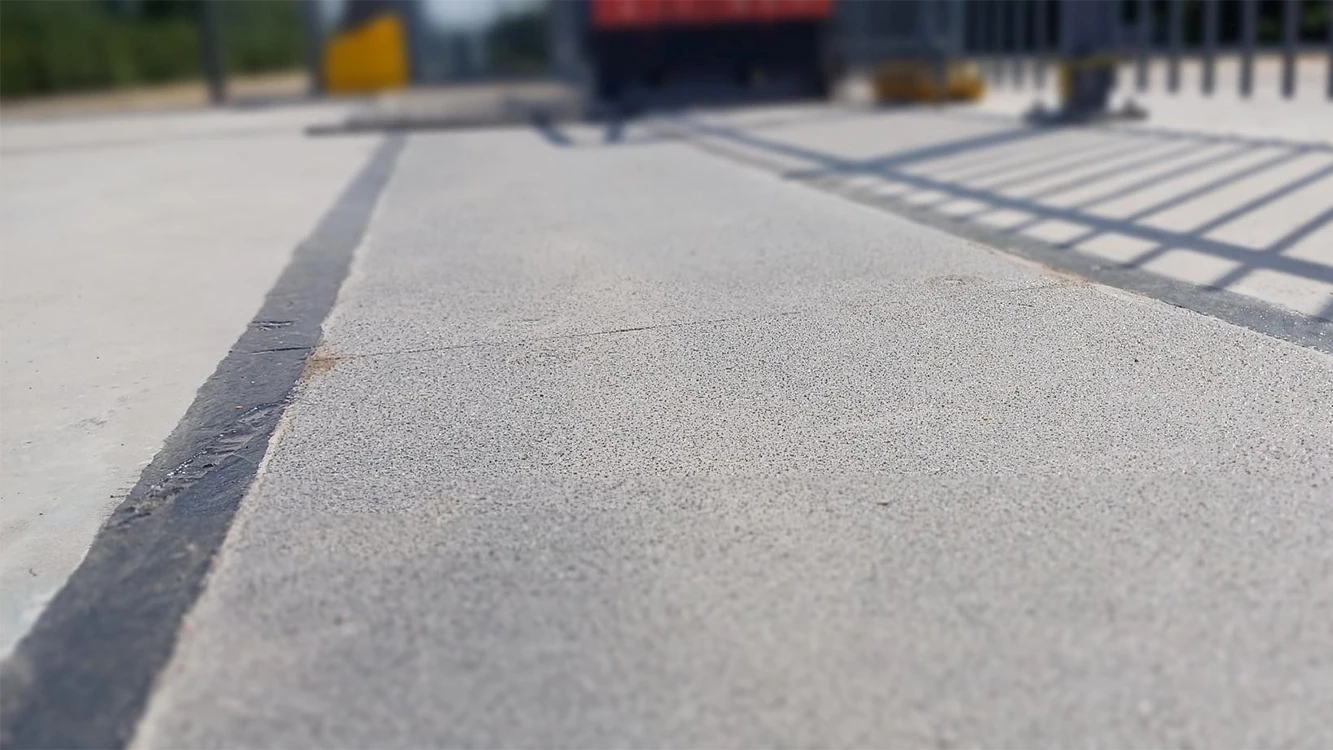
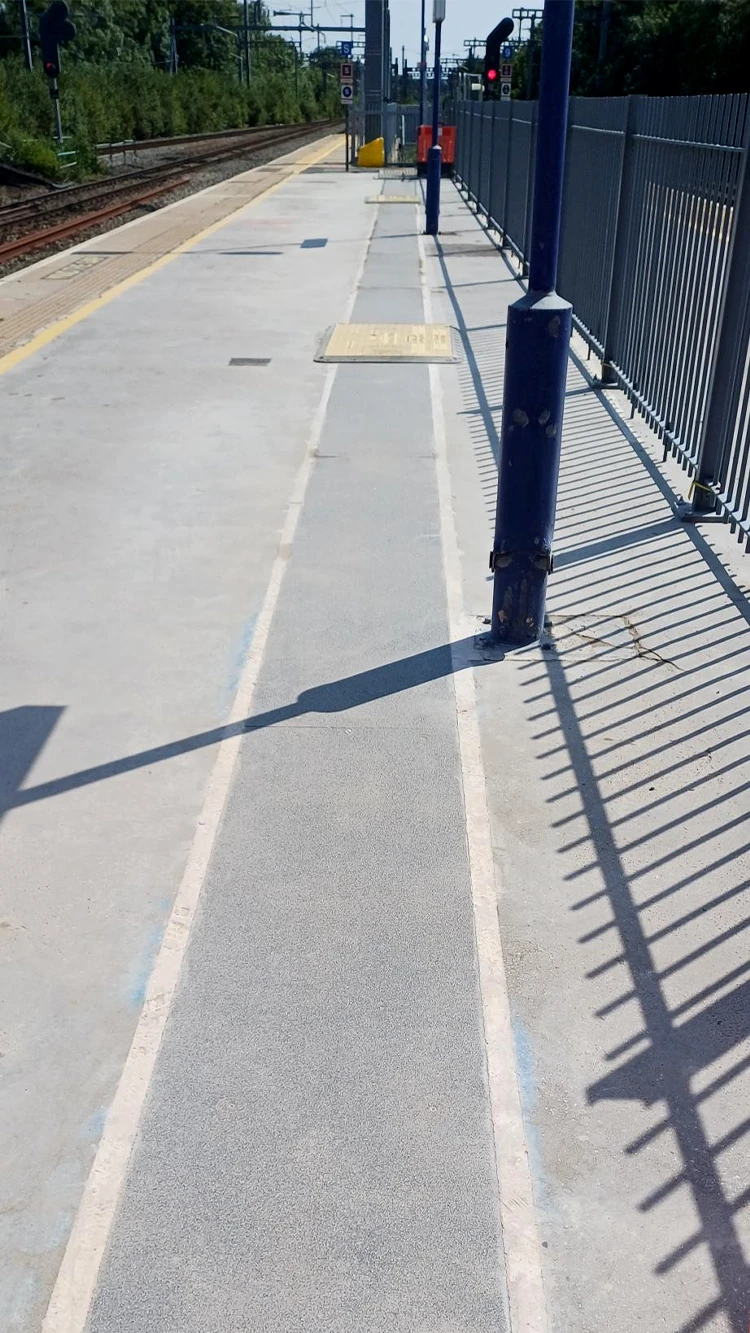
To overcome these constraints, the project team developed a first-of-a-kind solution using d² Dura Platform 40 as a shallow deck cable route — the first application of this approach on the UK rail network. Rather than routing services beneath the bridge, the existing concrete deck was locally broken out to a depth of approximately 35 mm. d² Dura Platform modular GRP panels were installed within this shallow excavation, creating a robust, accessible cable route fully integrated within the platform structure.
d² Dura Platform 40 was selected due to its established use across the UK rail network and its ability to address the project team’s key requirements, including:
- Fire performance suitable for station environments
- Anti-slip surfacing for passenger and staff safety
- Long-term durability in a high-traffic location
- Ease of cable installation and minimal future maintenance
- Modular and accessible design to support future upgrades
Collaborative Design and Assurance
The solution was developed through close collaboration between a multi-disciplinary project team, including:
- Great Western Railway as Station Operator
- Network Rail Technical Authority
- Civil, telecoms, and buildings principal engineers
- Regional asset managers
This integrated approach ensured that safety, operational performance, and long-term asset management considerations were embedded into the design from the outset.
Reduced Disruption and Accelerated Delivery
By routing services within the shallow deck build-up, the project avoided intrusive works beneath the bridge structure and eliminated the need for traffic management or road closures on the A308. This approach delivered substantial programme and cost benefits while maintaining station operations and minimising disruption to passengers, road users, and the local community.
Results and Impact
- First-of-a-kind use of d² Dura Platform 40 as a shallow deck cable route
- Safe and maintainable integration of electrical and communications services
- Avoidance of traffic management and night-time road closures on the A308
- Circa £500,000 cost saving compared to the alternative under-deck solution
- Avoided 6-month delay to commissioning
- Reduced construction risk in a constrained, live station environment
Replicability and Future Applications
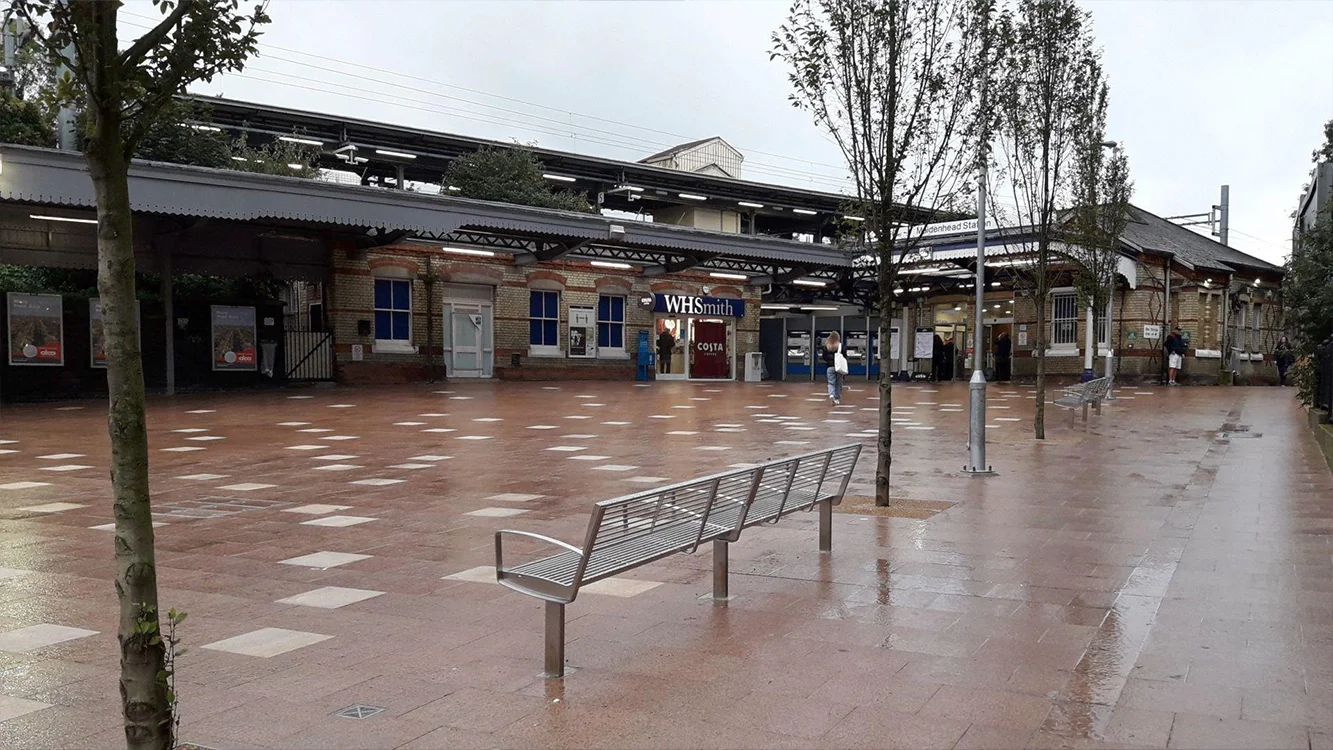
The Maidenhead Station project demonstrates how proven modular platform systems can be innovatively deployed to solve complex engineering challenges where depth, access, and operational constraints are critical.
This approach is readily transferable to other stations, platforms, and walking surfaces across the rail estate where similar constraints apply, offering a safer, faster, and more efficient alternative for future schemes.