
Back to the top of the page
Contact


    Early engagement. Lower risk. Better outcomes.

    We work alongside you early in the design process, where the biggest decisions — and the biggest risks — are shaped. Our role is to support your design intent, reduce uncertainty and help you lock in solutions that stand up technically, commercially and environmentally. We provide engineering insight, verified data and practical guidance that help you make confident, defensible decisions from concept through to delivery.

    Early engagement also helps you to maintain design integrity and avoid late-stage disruption by enabling effective clash detection while the design is still at concept stage, helping identify and resolve interface issues before they translate into programme risk or site-based compromise.

    1. Why Engage Early

    When we work with you earlier in the design process, you gain the flexibility and insight needed to avoid late-stage compromises.

    Certified

    Greater Design Freedom

    Early engagement helps explore feasibility before assumptions are fixed, enabling more ambitious and efficient configurations.

    Certified

    Clear Insight Into System Behaviour

    Understand how composite systems behave in real applications, improving confidence in performance, durability and safety.

    Certified

    Fewer Late-Stage Changes

    Reduce redesign and coordination issues during delivery by validating decisions upstream—before installation or site-works commence.

    2. Support When It’s Most Useful

    If you’re used to encountering specialist products only during the detailed design stage, when flexibility is limited, there is a better way. Engaging with us earlier can make a significant difference. By involving our team during concept development and design coordination, you can:

    • Reduce design risk by addressing performance, compliance and buildability from the outset
    • Streamline specification with accurate technical data, CAD/BIM resources and early-stage design input
    • Prevent late-stage redesign, by validating product suitability before commitment
    • Improve project outcomes through coordinated detailing, compatibility advice and informed product selection.

    We work closely with specifiers to provide clear direction, robust technical assurance and the practical resources needed to integrate composite solutions with confidence and efficiency. Our role is to help you make the right decision, even where that decision is not composite.

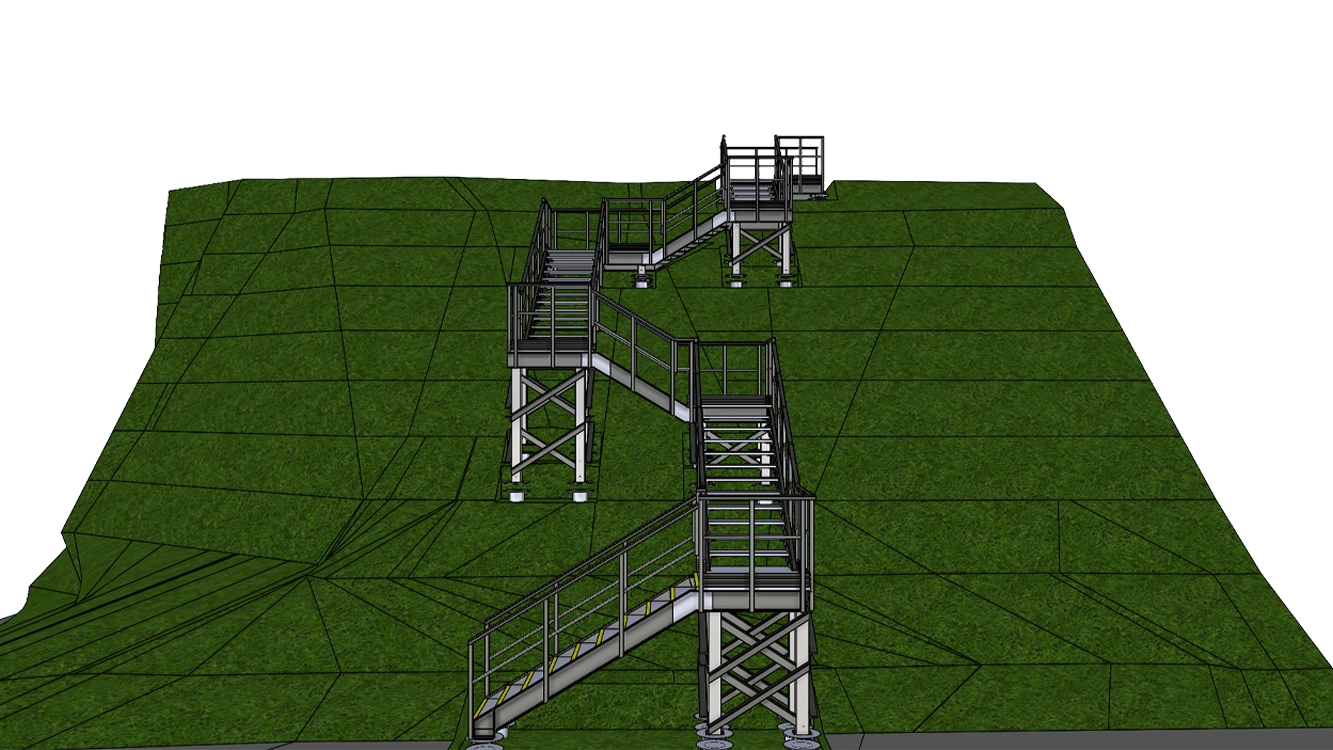
    Oldfield Road Embankment Stairs | View Project

    3. Specification Support You Can Trust

    Robust specifications rely on clarity, evidence and consistency. We provide all the data and documentation needed to specify our d² composite products with complete confidence.

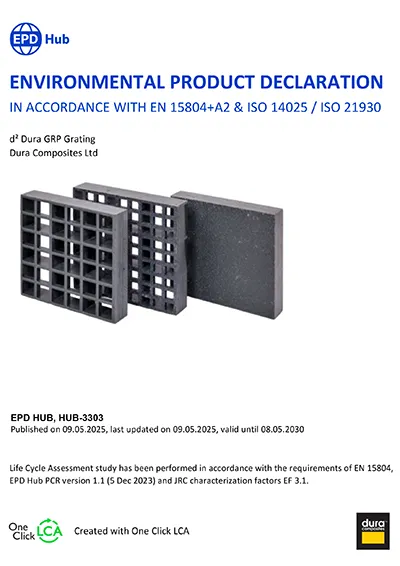
    EPD Dura Composites Moulded GRP

    EPDs (Environmental Product Declarations)

    Third-party verified data supporting transparent and comparable environmental assessment.

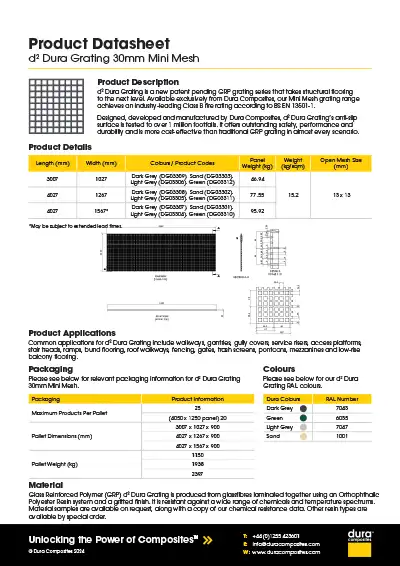
    d2-Dura-Grating-Mini-Mesh-30mm-Product-Datasheet-Dura-Composites

    Product Information for Specifications

    Structured and consistent product data aligned to specification and submission requirements.

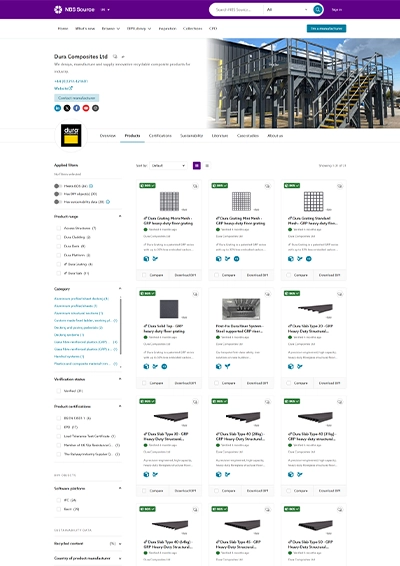
    BIM Objects

    Models that support efficient coordination, detailing and integration within your digital workflows.

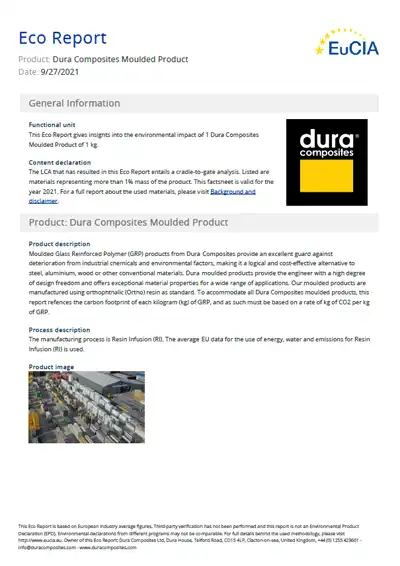
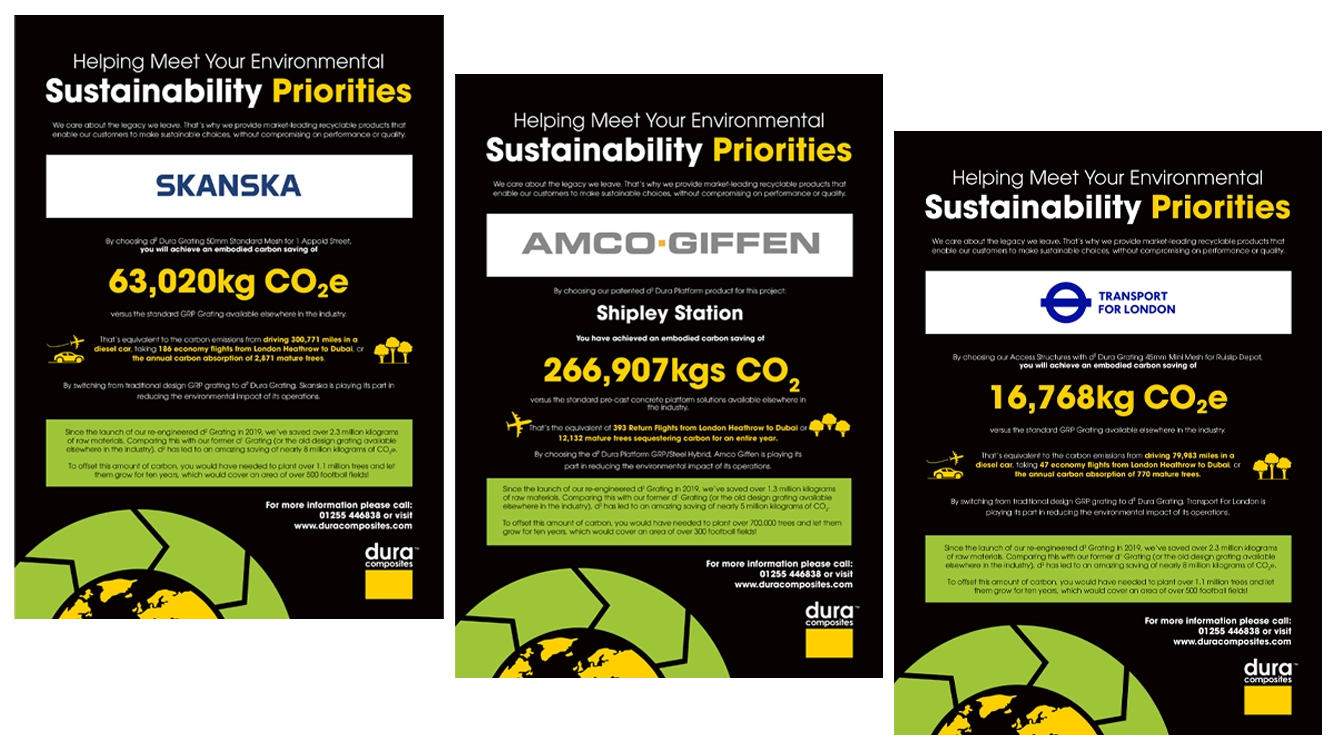
    Dura-Composites-Moulded-Product-Carbon-Report

    Embodied Carbon Reports

    Product-level embodied carbon values to support early-stage optioneering and reporting.

    4. Support Across RIBA/PACE Stages

    Whether your project follows the RIBA Plan of Work, or an alternative framework such as Network Rail’s PACE process, our approach remains the same. We align our support to the decisions being made at each stage, providing the right level of input, data and coordination to suit your workflow.

    RIBA 0–1 | PACE 1

    • Strategic advice on suitability, feasibility and early considerations.
    • Early considerations that shape the business case and outline brief.

    RIBA 1-2 | PACE 2

    • Support for concept design, optioneering and early assurance.
    • Early assurance to inform project selection and investment decisions.
    • Guidance that strengthens early design direction.


    RIBA 2-4 | PACE 3

    • Specification‑ready data to feed into coordinated design.
    • Detailed development support, ensuring technical robustness.
    • Constructability insight and design assurance aligned with technical design progression.

    RIBA 5 | PACE 4

    • Technical detail and delivery‑focused assurance.
    • Construct-ability expertise that supports manufacturing and construction phases.
    • Verification and documentation to support confident site execution.

    RIBA 6-7 | PACE 5

    • Continuity of project data through hand back and into operations.
    • Performance assurance and in‑use validation.
    • End‑of‑life and lifecycle considerations to support asset strategy and handover completion.

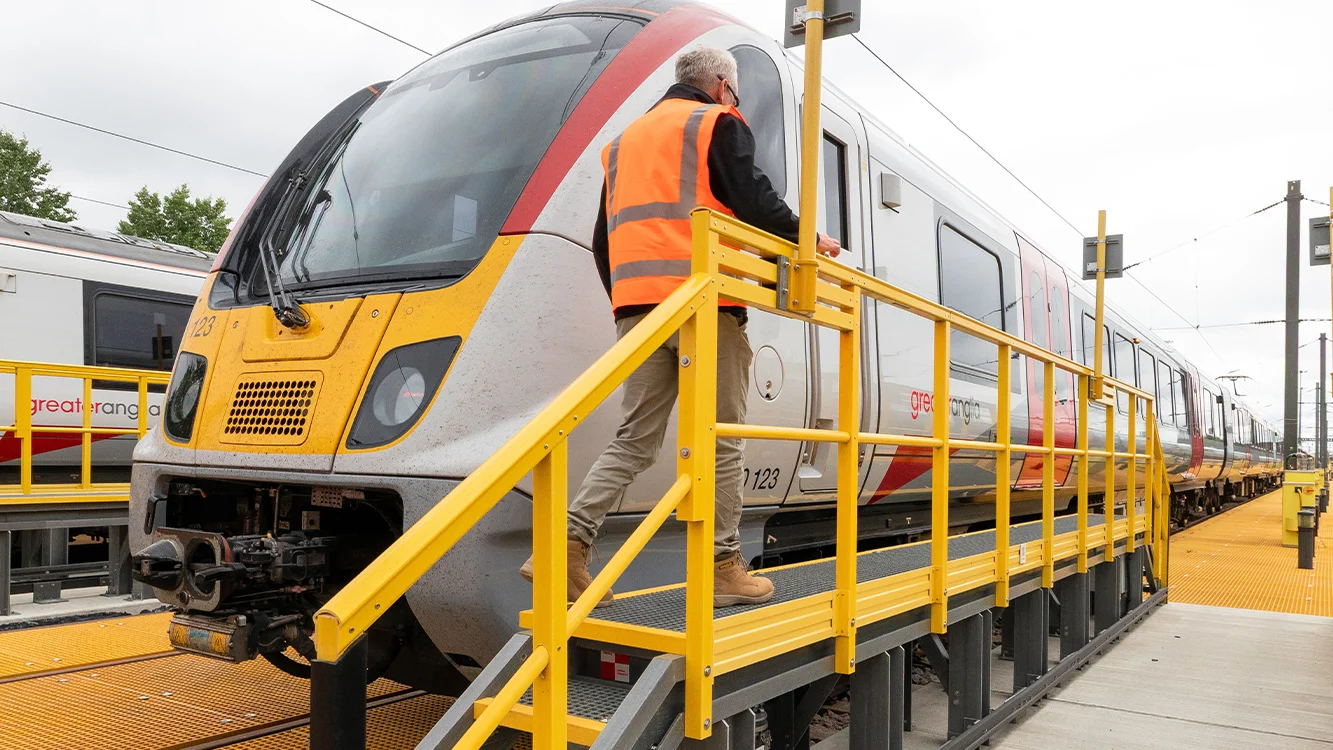
    Orient Way Traincare Depot | View Project

    5. The d² Product Range

    The support we provide is underpinned by our d² composite product range — modular walkway, access and platform systems engineered for long design life. d² combines:

    • High structural performance with low weight, supporting efficient design and installation.
    • Low embodied carbon by design. Intelligently carbon engineered through material efficiency and advanced manufacturing methods.
    • Durability in aggressive environments, reducing maintenance and whole-life intervention.
    • Full mechanical recyclability at end of use, supporting circular asset strategies.
    • Modular, quick to install systems that integrate cleanly into coordinated designs.

    This makes d² particularly well suited to design-led projects, where early decisions must remain robust through coordination, approval and delivery.

    Discover the d² difference

    6. Supporting Safety-Critical Design Decisions

    Access, walkway and platform systems are often safety-critical elements within a project. Our involvement during RIBA Stages 1–3 helps design teams:

    Partnership

    Confirm suitability of composite systems in safety-critical applications

    Strong

    Validate assumptions around loading, durability and performance

    Safety or Warranty

    Align material selection with approval and assurance expectations

    7. Making Carbon Data Usable in Design

    Carbon is increasingly a design input rather than a post-design calculation. We support carbon-led design by providing:

    • Product-level embodied carbon values
    • Data compatible with recognised assessment methodologies
    • Support for early-stage optioneering and comparison

    Where required, project-specific calculations can be developed from our d² product data to support option selection and reporting.

    View our Testing & Certification page

    8. Familiar, Understood, Easier to Use

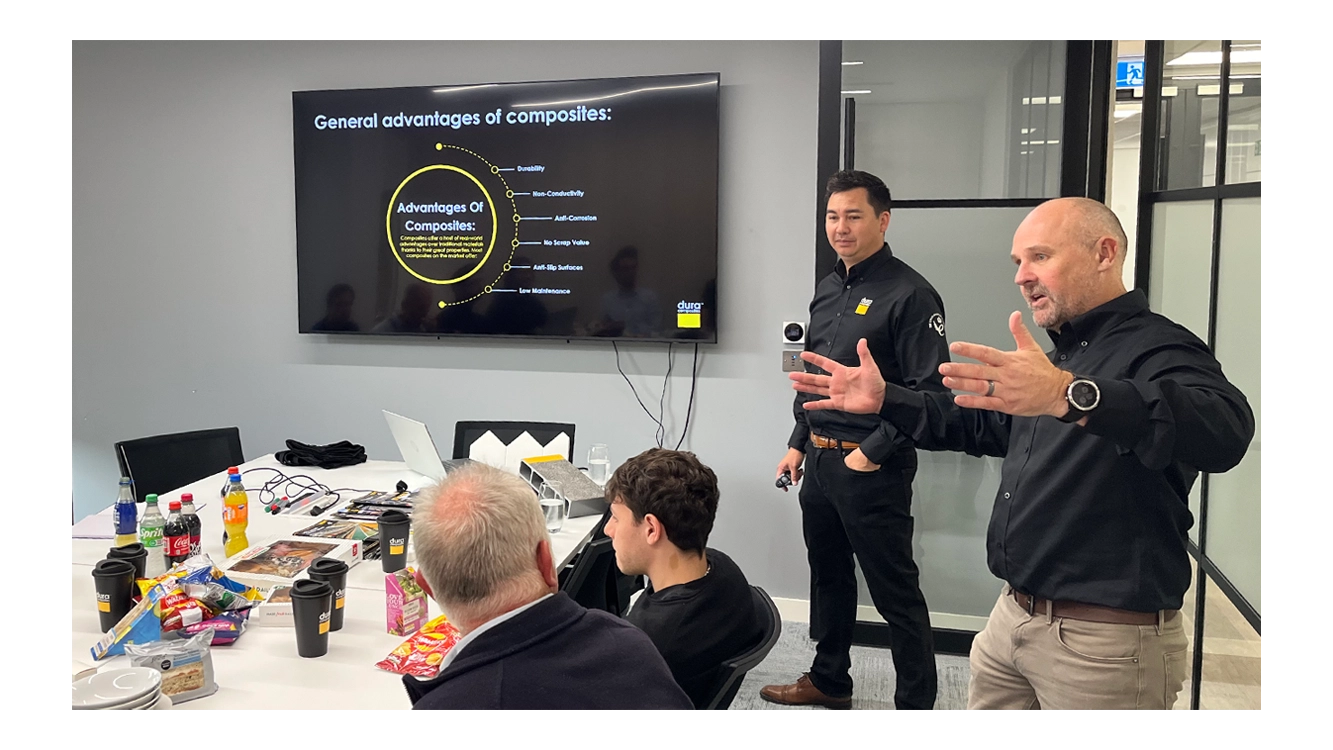
    Through early technical discussions and CPDs, we help you build familiarity with:

    • How composite systems behave structurally and operationally
    • Where they offer clear advantages
    • How they integrate with wider design and construction strategies

    That familiarity reduces uncertainty and makes specification simpler and more robust.

    Book your free CPD session

    FAQ

    As early as possible – ideally during conceprt and early coordination (RIBA Stages 1–3). We typically add the most value when design intent is still forming and material choices can be tested to help reduce risk later in the project.

    No. Early engagement is about exploring and understanding evidence-based design solutions. We support informed optioneering by providing verified data, engineering insight and practical guidance, while fully respecting your design leadership and decision-making.

    Yes. Our EPD-backed product data is structured for early-stage comparison, allowing carbon to be considered alongside performance, safety and constructability.

    No. While we will of course provide design and engineering support at Technical Design Stage 4, our preferred focus is on helping you reach that stage with fewer assumptions and greater confidence by supporting with early feasibility through to detailed design, specification and delivery.

    The more context we have, the better we can support you — but engagement doesn’t need to be fully formed. Useful information typically includes:

    • Drawings, sketches or marked-up layouts
    • Intended use, loading requirements or access type
    • Span information and support conditions
    • Fire performance requirements
    • Environmental or exposure conditions
    • Any known interfaces with other systems (steel, concrete, M&E, balustrades, edge protection)


    Even partial or early-stage information allows us to provide meaningful guidance and highlight key considerations from the outset.

    Our composite systems are designed to integrate cleanly with the wider built environment. Our team can advise on typical support arrangements, fixing strategies and load transfer considerations. We can provide guidance on interfacing with structural steel, concrete, waterproofing systems, M&E penetrations, fire stopping, balustrading and edge protection. Coordinating these interfaces early will help ensure compatibility, maintain performance and avoid late-stage detailing conflicts that can introduce risk.

    That’s entirely acceptable where stronger, more robust evidence becomes available. As designs develop and more detailed information emerges, earlier assumptions can naturally be tested and refined. If our data gives you greater confidence, we can support a structured review of previous decisions and help assess whether our d² product solutions are genuinely suitable for the application.

    Our products are intelligently carbon engineered, with verified data that allows carbon, performance and buildability to be considered together. Our role is to provide clear, evidence-based insight, ensuring any change is well-reasoned, defensible and firmly in the best interests of the project.

    Yes. Our systems are most often used in challenging environments, including exposed, corrosive or access-restricted locations. Early engagement allows environmental conditions and exposure classes to be properly considered in the design.

    Our d² systems are supported by verified performance data covering structural behaviour, durability and carbon impact. This allows decisions to be made on evidence rather than assumption, supporting compliance and long-term performance.

    Our CPDs are technical and practical, designed to build understanding of composite systems, their behaviour and appropriate use — supporting better informed design decisions over time.

    Where others just supply materials, we supply clarity, accountability and evidence.

    Every project is supported by an ecosystem of data, engineering insight and evidence that helps clients make clearer, safer and defensible decisions.

    Our role is to provide the information and support you need to de‑risk design, strengthen compliance, evidence sustainability and have confidence that what you choose will perform as expected — not just on paper, but in the real world.

    Discover our GRP Material Data Analysis Tool

    Our Specialists

    Get to know some of the faces behind Dura Composites, each contributing unique skills and perspectives. Together, we drive innovation and deliver exceptional results.

    Offshore Wind Farm