Balcony flooring options
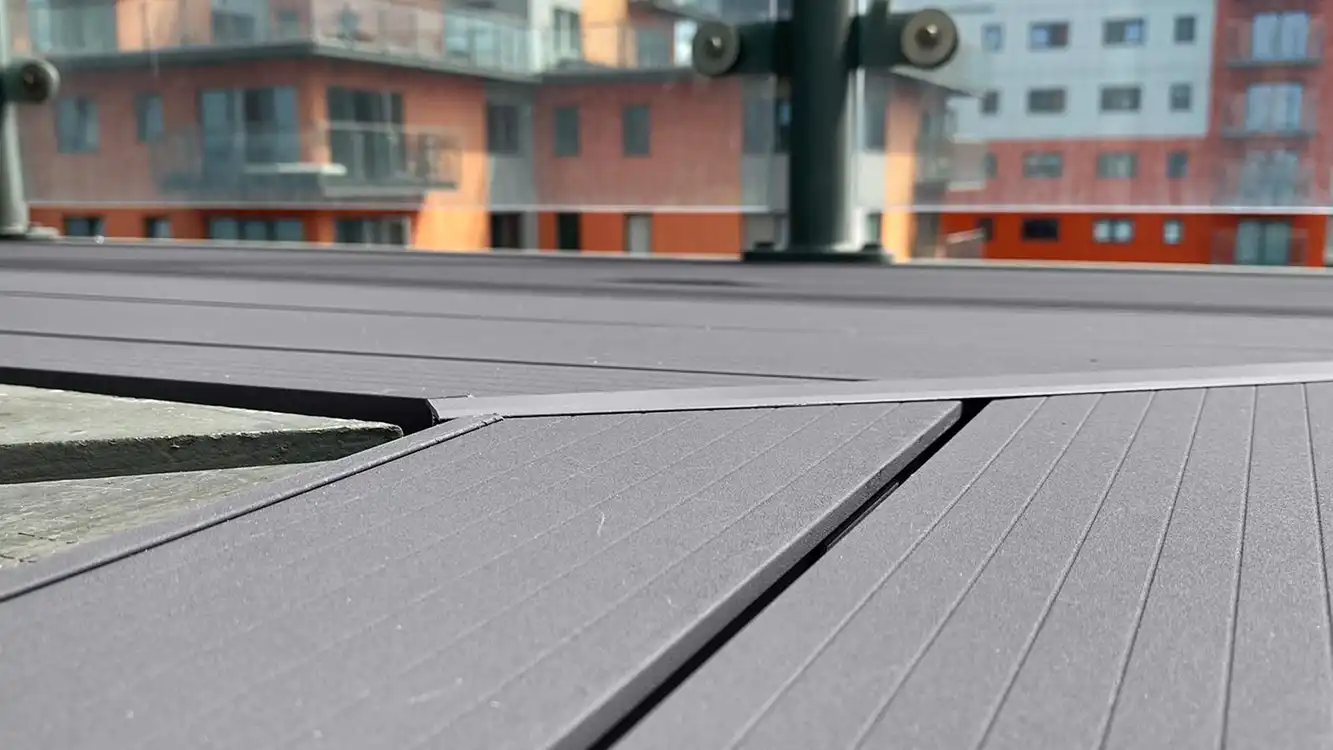
Aluminium decking
Aluminium is effectively non-combustible, produces very little smoke, and cannot meaningfully contribute to the growth or spread of a fire. It actively supports the fire safety strategy of the building by not adding significant fuel, flame, or smoke to the environment. That means as well as providing peace of mind, you’ll also be compliant with UK safety regulations. Just remember to check that all components of the product (including the substructure) are fire-rated, such as our own Dura Deck Aluminium.
The lightweight nature of aluminium means it is easy to transport and install, while its weather-proof, corrosion-resistant surface makes it ideal for the great British weather.
If you’re hoping to create a modern appearance, aluminium decking is the perfect choice, with a sleek, contemporary finish that will complement most new builds.
It can be a little noisier underfoot than other materials, so it may be worth fitting acoustic barriers.
Porcelain decking
Porcelain is fired at extremely high temperatures, resulting in a material that’s inherently non-combustible and won’t burn. It is therefore suitable to use in areas where fire safety is a primary concern, including balcony decking and firepit areas.
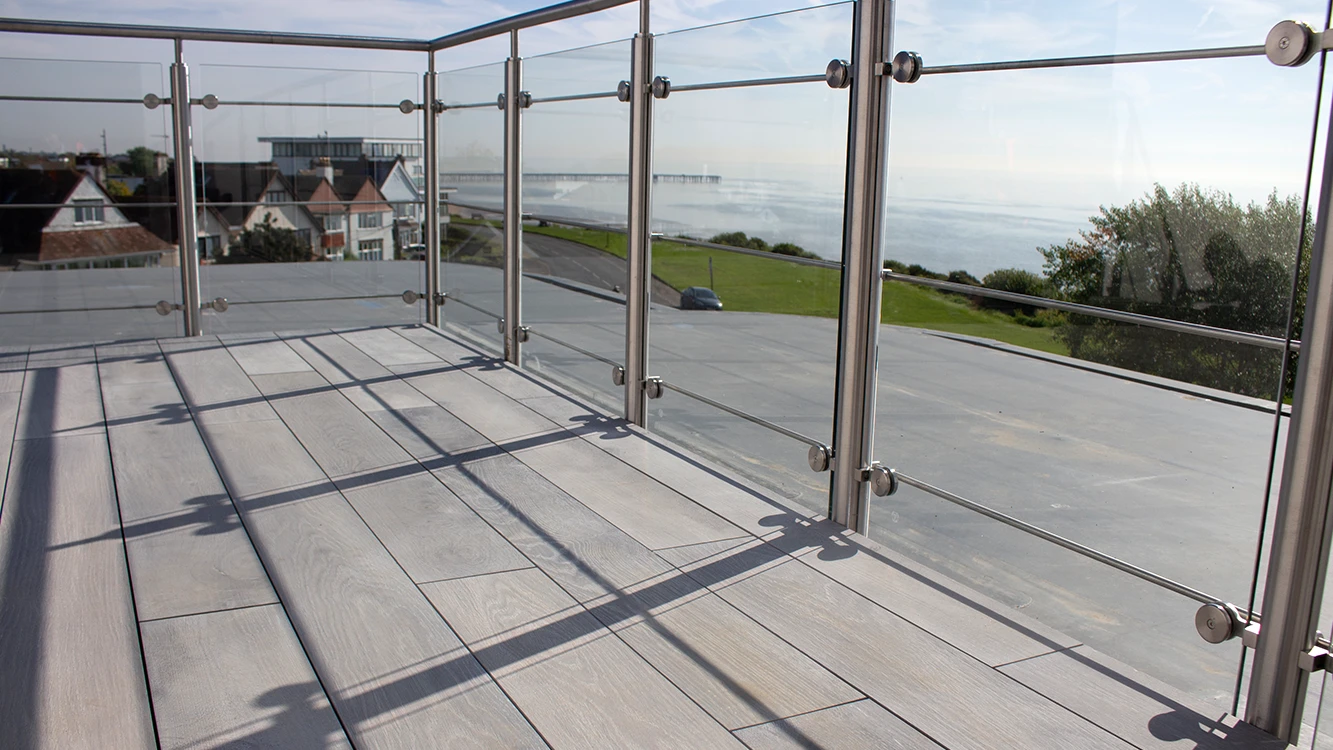
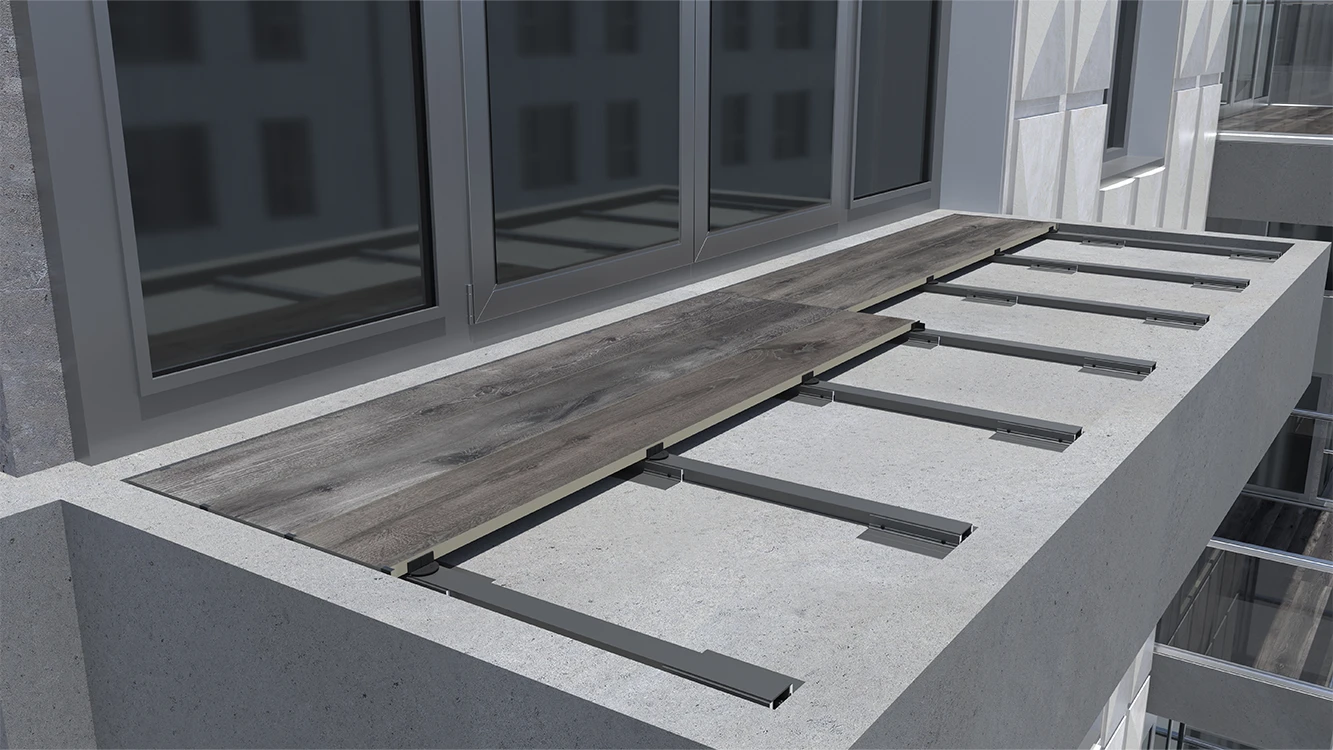
For those wanting to recreate the timeless appeal of natural timber decking, porcelain is probably the best option. Our own Dura Deck Inspire features a beautifully variegated wood grain finish, offering the best of both worlds – the look of luxury hardwood, without the maintenance. The hardwearing composition of porcelain also means that as well as requiring very little upkeep, it’s durable and resistant to scratches and scuffs.
Porcelain is fairly heavy, however, so it’s important to make sure the balcony structure can handle the load. Porcelain is also more brittle than aluminium or steel if something heavy is dropped onto it from a height, so this may need to be factored into your decision-making.
Composite timber
While timber or composite timber is an extremely popular choice when it comes to creating the perfect decking area in your own back garden, thanks to its natural wood-like appearance and durability, it’s not the right choice for high-rise buildings.
As we’ve already touched upon, residential buildings over 11 metres tall must use materials which are non-combustible, which means that materials like timber or composite decking products like Millboard are out of the question, regardless of how they’re treated.
For those who are really keen to emulate the woodgrain appearance, porcelain decking is a good alternative.
Weighing up balcony flooring options
Ultimately, the balcony decking material you opt for will depend on a number of factors, from your budget, to the intended use, to how it will complement the rest of your exteriors.
In many cases, aluminium is the most popular – and practical – choice. As well as meeting stringent safety guidelines, it’s lightweight, low-maintenance, and comes in modern designs and colours.